Showing posts with label lose weight. Show all posts

Top 30 Biggest Myths About Weight Loss

Misconceptions about how to lose weight abound, especially on the Internet. Get the facts on shedding pounds now: Start by dispelling these 30 commonly held — but wholly inaccurate — notions.
Myth 1: Some foods speed up your metabolism.

Metabolism describes all the chemical processes that go on continuously inside the body to keep you alive and your organs functioning normally, such as breathing, repairing cells and digesting food. 

These processes need energy and the amount of energy required varies between individuals depending on factors such as body size, age, gender and genes.

It is claimed that certain foods and drinks can increase your metabolism by helping the body to burn more calories and aid weight loss. 

There is little scientific evidence for this. Beware that some of these products may contain high levels of caffeine and sugar. To lose weight you need to burn more calories than you consume.

Myth 2:  All slimming pills are safe to use for weight loss.

Myth 3: Fad diets will help me lose weight and keep it off.

Myth 4: Grain products such as bread, pasta, and rice are fattening. I should avoid them when trying to lose weight.

Myth 5: Some people can eat whatever they want and still lose weight.

Myth 6: "Low-fat" or "fat-free" means no calories.

Myth 7: Set a Realistic Goal Weight—Or Else You'll Be Totally Discouraged.

It sounds reasonable, but there's no evidence to back it up: Feeling frustrated about a seemingly difficult-to-achieve weight isn't going to preclude you from hitting your goal.

Myth 8: Fast foods are always an unhealthy choice. You should not eat them when dieting.

TIP: Many fast foods are unhealthy and may affect weight gain. However, if you do eat fast food, choose menu options with care. Both at home and away, choose healthy foods that are nutrient rich, low in calories, and small in portion size.

To choose healthy, low-calorie options, check the nutrition facts. These are often offered on the menu or on restaurant websites. And know that the nutrition facts often do not include sauces and extras. Try these tips:
  • Avoid "value" combo meals, which tend to have more calories than you need in one meal.
  • Choose fresh fruit items or nonfat yogurt for dessert.
  • Limit your use of toppings that are high in fat and calories, such as bacon, cheese, regular mayonnaise, salad dressings, and tartar sauce.
  • Pick steamed or baked items over fried ones.
  • Sip on water or fat-free milk instead of soda.
Myth 9: If I skip meals, I can lose weight.

Myth 10: Eating healthy food costs too much.

Myth 11: Lifting weights is not a good way to lose weight because it will make me "bulk up."

Myth 12: Physical activity only counts if I can do it for long periods of time.

Myth 13: Don't Lose Weight Quickly—Go Slowly

You've heard it a million times: If you lose weight super quickly, it'll be hard to keep that weight off in the long-run, compared to losing weight slowly and steadily. 

Turns out there's not much research to support this, and that weight-loss retention is a lot more complicated than the speed at which you drop the pounds at the outset.

Myth 14: Eating meat is bad for my health and makes it harder to lose weight.

Myth 15: Dairy products are fattening and unhealthy.

Myth 16: "Going vegetarian" will help me lose weight and be healthier.

Myth 17: Weighing Yourself Daily Interferes with Weight Loss

Myth 18: Genes Aren't a Factor in the Obesity Epidemic.

While you'd love to inherit your mom's smarts, smile, and sense of style, her slow metabolism and tendency to crash diet are traits you'd probably rather pass on
.

Myth 19: A radical exercise regime is the only way to lose weight.

Myth 20: Starving myself is the best way to lose weight.

Myth 21: Cutting out all snacks can help you lose weight.

Snacking isn't the problem when trying to lose weight: it's the type of snack. 

Many people need a snack in-between meals to maintain energy levels, especially if they have an active lifestyle. Choose fruit or vegetables instead of crisps, chocolate and other snacks that are high in sugar, salt and  fat.

Myth 22: Drinking water helps you lose weight.

Water does not cause you to lose weight, but it does keep you hydrated and might help you snack less. Water is essential for good health and well being. 

Sometimes thirst can be mistaken for hunger – if you're thirsty you may snack more.

Myth 23: There are some magical foods that cause weight loss.

Myth 24: Drinking while you are eating is fattening.

Myth 25: Losing Weight is a Linear Process.

Losing weight is usually not a linear process, like some people think.
Some days and weeks you may lose, while during others you may gain a little bit.

Losing weight can take a long time. The process is generally not completely linear, as weight tends to fluctuate up and down by a few pounds.

Myth 26: “Eat Less, Move More” is Good Advice.

Myth 27: Fat Makes You Fat.

Body fat is stored fat. So, eating more fat should make us store more of it. It seems logical.

However, it turns out that things aren’t this simple. There is nothing uniquely fattening about fat, except that it is often found in calorie-dense junk foods.

As long as calories are within range, fat does not make you fat. Additionally, diets that are high in fat (but low in carbs) have been shown to cause weight loss in numerous studies.

As with so many things in nutrition, this depends entirely on the context.

Eating a lot of fat along with a high-carb, high-calorie, junk food-based diet will definitely make you fat. But it’s not just because of the fat.

Fat has often been blamed for the obesity epidemic, but there is nothing inherently fattening about dietary fat. It depends entirely on the context.

Myth 28: Eating Breakfast is Necessary to Lose Weight.

Myth 29: People With Obesity Are Unhealthy, Thin People are Healthy.

It is true that obesity is associated with an increased risk of several chronic diseases.

This includes type 2 diabetes, heart disease, increased risk of some cancers, and others.

However, there are still plenty of people with obesity who are metabolically healthy, and plenty of thin people who have these same chronic diseases.

It seems to matter where the fat builds up. If you have a lot of fat in the abdominal area, around the organs, then this type of fat is much more strongly associated with metabolic disease.

The fat that builds up under the skin, the subcutaneous fat, is more of a cosmetic problem.

Obesity is linked to several chronic diseases, such as type 2 diabetes. However, many people with obesity are metabolically healthy, and many thin people are not.


Myth 30: Frozen fruits and vegetables are less nutritious than fresh ones.

The Best Calf-Toning Workout

The best calf workout to tone your legs are exercises that can be performed just about anywhere and are easy to do, especially if you have a busy lifestyle.

Heel Raise 4 Sets - 15 Reps

The heel raise is a powerful way of toning your calf muscle by concentrating your body weight on one leg. 

Balance yourself by standing on your right foot with your left foot behind your right calf. 

Slowly raise up on the ball of your right foot, contracting your calf at the top of the lift. Relax and lower to the starting position.

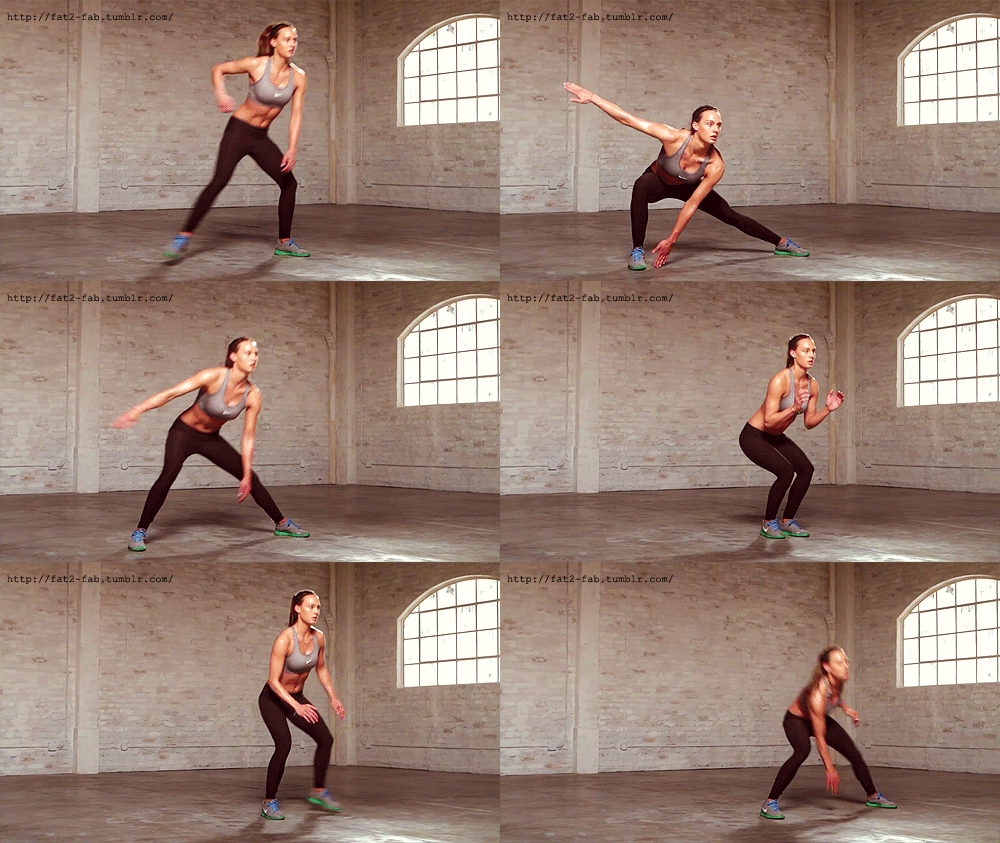
Side Lunges 3 Sets - 10 Reps

Performing side lunges will tone and strengthen your calf muscles to maintain balance. 

While standing up straight with legs shoulder-width apart, turn your torso to the right, Turn your right foot to point in the same direction. 

Slowly lunge halfway down, bending at the knee feeling the stretch in your calf. Slowly raise back up to starting position. 

Calf Lift 3 Sets - 15 Reps

The calf lift is an exercise that tones your calf muscles and defines the muscle. 

Standing with your hands on your hips or resting them on an object in front of you. 

Raise up on your toes, feeling the stretch in your calf muscles. Hold this position for three seconds and lower.

Calf Raise on Step 3 Sets - 10 Reps


Step calf raises tone and define your calf muscles. Stand on a step or on a couple of books, with your heel freely hanging over the edge. 

Hold onto an object in front of you, such as a chair, for balance. Raise up on the balls of your feet, hold for two seconds and lower your heels down, lower than the level of the step. 

When you have mastered this exercise, performing this exercise one leg at time will give you a more intense workout.

Tips
Perform exercises for your calf muscles every second day. Leave a day in between for rest and recovery.


BEST ONLINE YOGA CLASSES

Yoga has more benefits than burning calories and toning muscles. It's a total mind-body workout that combines strengthening and stretching poses with deep breathing and meditation or relaxation.

In this this article we answer the most frequent asked questions about yoga, and we present the best selling online yoga classes that actually work.

What is yoga?

Yoga is an ancient form of exercise that focuses on strength, flexibility and breathing to boost physical and mental wellbeing. 

The main goals of yoga are strength and flexibility, the bonus from doing yoga poses is burning calories and improving your breathing and your mind-body connection. 

The practice originated in India about 5,000 years ago, and has been modernized in other countries in a variety of ways to meet the modern era needs.

What are the health benefits of yoga?

Various studies proved that yoga is a safe and effective way to increase physical activity, regarding weight loss, strength, flexibility and balance. 

There's some evidence that regular yoga practice is beneficial for people with high blood pressure, heart disease, aches and pains – including lower back pain – depression and stress.

Am I too old for yoga?

Absolutely not. People often start yoga in their 70s, and many say they wish they had started sooner. 

A good yoga class will meet up with any fitness level and age group. Yoga is a form of exercise that can be enjoyed from childhood to your advanced years.

Do I have to be fit to do yoga?

If you are already fit, just keep on what you are doing and adopt yoga to gain more strength and balance. 

But no, you can join a class at any fitness level.

What type of class should I look out for?

Classes can vary in duration, intensity and poses' choice, but typically a good yoga class last between 45 minutes to 1 hour and 30 minutes. 

A longer class will give you more time for learning breathing and relaxation techniques

7 DAYS DIET PLAN TO LOSE 5 Lbs

Your plan of slimming down can't be complete without a diet plan. In this article we will give you a week-long menu diet plan estimated to help you lose about 5 pounds per week. 

This diet plan must be adopted over 90 days to get the wanted results. 

You will be consuming 1200 calories , you can add calorie-free beverages and take a multivitamin to fix any nutrition unbalances.

Day 1

Breakfast
• 3/4 cup bran flakes, 1 banana, 1 cup fat-free milk
Lunch
• Sandwich: 1 mini whole wheat pita, 3 ounces turkey breast, 1/2 roasted pepper, 1 teaspoon light mayonnaise, mustard, lettuce
• 1 stick part-skim mozzarella string cheese
• 2 kiwifruits
Dinner
• 4 ounces broiled flounder or sole
• 2 sliced plum tomatoes sprinkled with 2 tablespoons grated Parmesan cheese, broiled until just golden
• 1 cup cooked couscous
• 1 cup steamed broccoli
• 1 fat-free pudding cup

Day 2

Breakfast
• Smoothie: Blend 1 cup frozen berries, 1/2 banana, and 8 ounces fat-free milk.
• 1/2 English muffin spread with 1 teaspoon light margarine
Lunch
• 1 cup vegetarian vegetable soup
• 1 veggie burger in a mini whole wheat pita with lettuce and salsa
• 6 ounces light yogurt
• 15 grapes
Dinner
• BBQ chicken: Brush 4 ounces boneless, skinless breast with barbecue sauce and grill.
• 1/2 cup vegetarian baked beans
• 3 small boiled red potatoes topped with 1 teaspoon light margarine and a pinch of dill

Day 3

Breakfast
• Oatmeal: In the microwave, cook 1/2 cup quick-cooking oats with 3/4 cup fat-free milk; 1/2 apple, chopped; 1 teaspoon honey; and a pinch of cinnamon
Lunch
• Chicken salad: Toss 4 ounces shredded skinless roast chicken breast with 1/4 cup sliced red grapes, 1 tablespoon slivered almonds, 1 tablespoon light mayonnaise, and 1 tablespoon fat-free sour cream. Serve over lettuce.
• 1 banana
Dinner
• 4 ounces steamed shrimp
• 1 baked potato topped with 3 tablespoons salsa and 1 tablespoon fat-free sour cream
• 3 cups spinach, steamed
• 1 low-fat frozen fudge bar

Day 4

Breakfast
• 1/2 toasted English muffin topped with 1/2 small apple, sliced, and 1 ounce shredded reduced-fat cheese, any type. Microwave 30 seconds on High.
• 6 ounces light yogurt sprinkled with 1 tablespoon slivered almonds
Lunch
• 1 cup tomato soup
• Sandwich: 1 mini whole wheat pita, 3 ounces thinly sliced roast beef, 1 teaspoon horseradish, mustard, tomato slices, lettuce
• 1 cup raw veggies
• 1 pear
Dinner
• 3 ounces poached salmon
• Slaw: Toss 1 1/4 cups coleslaw mix and 2 sliced green onions with 2 tablespoons fat-free dressing (no more than 30 calories per 2 tablespoons)
• 3/4 cup cooked brown rice
• 1/2 cup pineapple chunks in juice

Day 5

Breakfast
• 1 cup Cheerios, 1/2 cup berries, 1 tablespoon slivered almonds, 8 ounces fat-free milk
Lunch
• Quesadilla: Spread 1/4 cup fat-free refried beans over 1 small whole wheat tortilla. Sprinkle on 1 ounce shredded reduced-fat cheese. Top with salsa and another tortilla; microwave 45 seconds on High.
• 1/2 cup low-fat cottage cheese topped with 1/2 cup mandarin orange sections
• Cucumber spears
Dinner
• 3 ounces roasted pork tenderloin
• 1 cup baked acorn squash, mashed with a pinch of cinnamon
• 2 to 3 cups salad greens with 2 tablespoons fat-free dressing
• 1/2 cup vanilla fat-free frozen yogurt topped with 1 cup berries

Day 6

Breakfast
• 1 toasted frozen waffle, spread with 1 tablespoon peanut butter and topped with 1/2 sliced banana
• 8 ounces fat-free milk
Lunch
• Tuna pita: 1 mini whole wheat pita, 2 ounces water-packed light tuna, 1 tablespoon light mayonnaise, mustard, and cucumber and onion slices
• 10 baby carrots
• 6 ounces light yogurt mixed with 1/2 banana
Dinner
• Jambalaya: Combine 3/4 cup cooked brown rice; 1/2 cup corn; 2 ounces cooked turkey sausage, sliced; 1/3 cup salsa; and 1/4 cup canned kidney beans. Heat through.
• 3 cups spinach, steamed
• 1 medium apple

Day 7

Breakfast
• 1/2 toasted English muffin layered with 1 ounce reduced-fat cheese, sliced; 1 tomato slice; 1/2 cup steamed spinach, drained; and 1 poached egg
• 1 grapefruit
Lunch
• Black bean salad: Toss 1/2 cup canned black beans, 1/2 cup mandarin orange sections, and chopped red bell peppers, red onion, and scallions with 1 teaspoon vinegar. Serve over salad greens.
• 1 mini whole wheat pita
• 1 pear
Dinner
• 3 ounces broiled or grilled flank steak
• 1 baked sweet potato with 1 teaspoon light margarine
• 1 cup steamed zucchini
• 1/2 cup pineapple chunks in juice

HOW TO BUILD A GLORIOUS PERFECT BOOTY

Pop onto any fitness board on Pinterest and you'll soon learn that it's all about the butt! Who doesn't want a backside that turns heads?
When it comes to building a perfect glorious booty, here's the bottom line: To lift your butt, you have to build muscle.

Doingcardio will give you a svelte awesome look, but you won't build a great bum unless you do some serious weight (body weight included) training. 

If you're not sure what to do and/or which moves and techniques for building the perfect booty? Don't worry, after you're done with this article, you will officially get a PhD in 'How to Build a Perfect Glorious Booty'
Building new lean muscle will help develop your glutes and they will grow in a natural round shape.

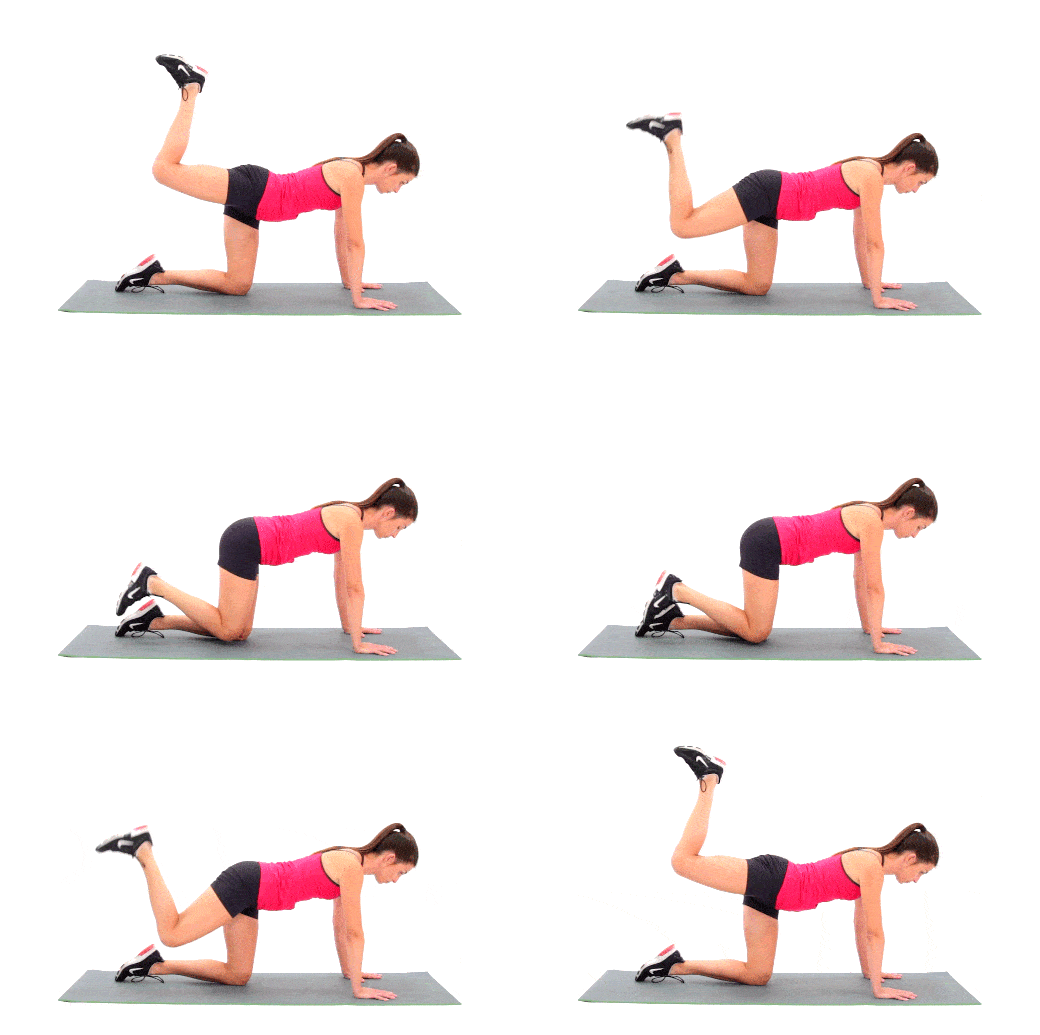
1.Donkey kicks - 4 sets of 12 reps

Starting on your hands and knees, keeping your core tight and back flat, raise 1 leg and keeping knee at 90 degrees. 

Push that leg as high as you can in the air and lower back down, repeat for 12 reps, then switch legs.

2.Adductor squats - 3 sets of 15 reps

Feet stance should be wider than hip width; keep your back straight and arms locked with the dumbbell in the middle.

Lower your body weight into a squat then hold before your rise back to the start position.

3.Curtsy lunge - 2 sets of 20 reps

Stand with your feet hip-width apart, and, keeping your weight on one foot, take a big step back with your other leg, crossing it behind your left leg (as if about to do a ‘curtsy’).

Bend your knees and lower your body straight down until your front thigh is parallel to the floor, and both knees are bent at 90 degrees. Be sure to keep your core tight the entire time to stabilize yourself.

Rise back up into your starting position and do the same thing with the other leg.

Your toes should be pointed straight ahead the entire time, and keep your knee over your ankle to avoid injury.

4.Rainbows - 3 sets of 12 reps

Begin on all fours with your knees hip-width apart and your wrists stacked over your shoulders. With a pointed toe, extend your left leg behind you and slightly to the left side. 

It should be level with your spine. Keeping your core tight and leg straight, slowly lower your leg to tap the floor. 

Squeeze your glutes as you lift the leg back to starting position, then slowly tap the floor about a foot to the right. Return to starting position to complete the rep. 

5.Single Leg Dead Lift - 3 sets of 12 reps

Stand with your feet hip-distance apart and your right foot a few inches in front of your left. 

The left knee should be slightly bent. Draw your abs in and slowly fold forward, keeping your left foot in line with your spine as you reach toward the floor with both hands. Pause, then return to starting position. Don't rest before switching sides.

6.Side lying leg kicks - 2 sets of 20 reps

Lie on right side, supported on elbow, legs long and slightly in front of body. Raise left leg to hip height, exhale to kick left leg forward and pulse, inhale, lengthen leg to back until you complete 15 reps.

Note: Don't forget to stretch before and after this workout. 

Bonus Exercise - Bent-Over Leg Extension

This is an advanced exercise. But if you strenghten your glutes enough to handle this exercise, it will help big time in your quest to get the perfect glorious booty.

AEROBIC TRAINING: A SAFE AND HEALTHY WAY TO LOSE WEIGHT

WHAT IS AEROBIC TRAINING ?

Aerobic training - also known as cardio - is physical exercise of low to high intensity that depends primarily on the aerobic energy-generating process. 

Aerobic literally means "relating to, involving, or requiring free oxygen", and refers to the use of oxygen to adequately meet energy demands during exercise via aerobic metabolism. Generally, light-to-moderate intensity activities that are sufficiently supported by aerobic metabolism can be performed for extended periods of time.

When practiced in this way, examples of cardiovascular/aerobic exercise are medium to long distance running/jogging, swimming,cycling, and walking, according to the first extensive research on aerobic exercise, conducted in the 1960s on over 5,000 U.S. Air Force personnel by Dr. Kenneth H. Cooper.

Aerobic training and fitness can be contrasted with anaerobic exercise, of which strength training and short-distance running are the most primary examples. 

The two types of exercise differ by the duration and intensity of muscular contractions involved, as well as by how energy is generated within the muscle.

BENEFITS OF AEROBIC TRAINING

New research on the endocrine functions of contracting muscles has shown that both aerobic and anaerobic exercise promote the secretion of myokines, with attendant benefits including growth of new tissue, tissue repair, and various anti-inflammatory functions, which in turn reduce the risk of developing various inflammatory diseases. 

Myokine secretion in turn is dependent on the amount of muscle contracted, and the duration and intensity of contraction. As such, both types of exercise produce endocrine benefits.
Of course, the obvious benefit of aerobic training is losing fat. You weight loss goals can be easily achieved if aerobic training is being adopted as the main solution to lose weight.
There is no such thing as the best exercise for everyone. 

Aerobic training is beneficial to your heart as long as the type of exercise satisfies some basic requirements and you follow the recommended program goals, as prescribed by your doctor or exercise physiologist.

Your aerobic training program should have four goals:

  1. It is aerobic training, i.e. It uses large muscle groups repetitively for a sustained amount of time
  2. You perform it for 30 to 60 minutes, three to five days a week
  3. It meets the cardiovascular goals your doctor or exercise physiologist has prescribed for you
  4. It is something you will enjoy doing for an extended period of time

BONUS

This is an example of how a proper aerobic exercise should look like. Search more and find a aerobic training programs that suites your needs and goals.


HOW TO DIET

The main question is - can a diet help you lose weight? Most of the diets' plans promote fast weight loss but short enough weight creeps back at the end of the diet.

Many fad diets are based on bro-science, not on solid scientific facts with studies and research, recommending eating practices that are unhealthy that could make you ill.

Health associations around the world warn against following popular diets such as the Dukan diet, which it said was complicated, not based on scientific evidence and reportedly did not lead to long-term weight loss.

We list below the problems that lay within fad diets, mentioning how you can diet with a healthy and safe way:

3 Reasons to Avoid Fad Diets

Once you read or hear that a diet promises you to lose weight quickly, that is the first sign to start investigating more. 

Often these diets only focus on short-term results, so at the end of the diet you will become confused and put up all the weight back again. 

Legit diets could promise a quick weight loss result, but also provide the instructions on how to maintain it.

Here are three reasons why following the latest novelty diet may not be a bright idea to lose weight:

1. Some diets can make you ill

Crash diets, are based on caloric deficit, i.e. reducing the number of calories you consume. 

They can make you feel very unwell and unable to do your daily tasks properly. The nutrition unbalance of crash diets can lead to long-term poor health problems.

2. Excluding foods is dangerous

You will find that some diets endorse cutting out certain foods, such as meat, fish, wheat or dairy products. 

Removing certain food groups altogether from your diet makes your body crave for important nutrients and vitamins that are critical for your body to function properly.

3. Low-carb diets can be high in fat

The Atkins diet is very popular, the principal of this diet is to remove carbohydrates (for example, pasta, bread and rice), carbohydrates are an important source of energy, not only for your body, but even your brain needs carbohydrates.

A new study, published in The Quarterly Review of Biology combed through archaeological, anthropological, genetic, physiological, and anatomical data to figure out whether carbohydrate consumption was a key factor in our brain development over the last million years. 
Turns out, potatoes, grains, fruits, and other healthy starches may be the reason humans developed our trademark big brains in the first place, says lead author Karen Hardy, Ph.D., a researcher at Universitat Autònoma de Barcelona specializing in ancient nutrition. 

These types of diets can actually make you lose weight, but they're often high in protein and fat, and with no carbohydrates to balance that, you will become ill.

Bad breath, headaches and constipation is another side effects of Low-carbohydrate diets.

More Fad Diets


How to Lose Weight the Healthy Way

We put on weight when we don't burn the consumed food as energy by being inactive. The intake of calories we eat must never exceed the amount of calories we burn through normal everyday activities and exercise.

The only way to lose weight healthily and keep it off is to adopt good habits regarding the way you eat and exercise. 

Just a simple alternation, such as eating less and choosing drinks that are lower in fat, sugar and alcohol, can help you lose weight.

If you're overweight, adopt the same rule by taking less food than you use to.

For example if your typical lunch is a bowl of salad, steak, 4 potatoes, and a dessert; try to get a smaller bowl of salad, smaller steak , eat 3 potatoes and a smaller dessert or eat fruits instead.

The intake reduction must not be major so you won't feel hungry, only a 10-15% reduction is enough to lose about 5-10% of your starting weight by losing 0.5-1kg (1-2lb) a week.

Exercise and weight loss

Being active will help you big time in your quest to lose weight. Also having a regular physical activity reduces your risk of developing a serious illness. 

The amount and nature of physical activity recommended depends on your age and fitness level, but it still counts from walking to lifting weights, the main idea is to just move your body, and become/stay active.